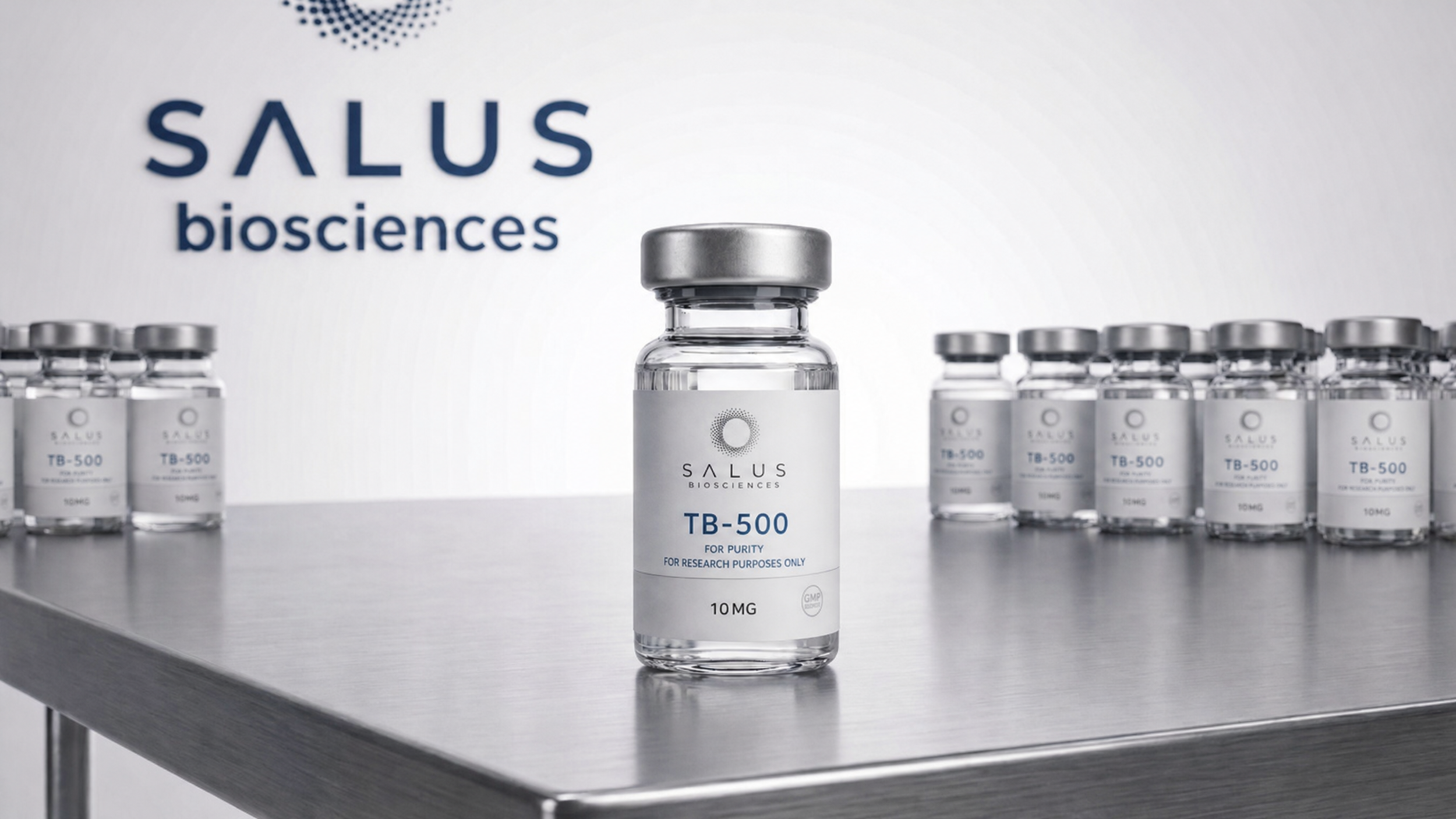
(10 mg vial)
Once-daily subcutaneous protocol for tissue repair, wound healing, and angiogenesis research.
B-500 is a synthetic peptide fragment corresponding to the active region of thymosin beta-4 (Tb4), a naturally occurring 43 amino acid protein involved in tissue repair and regeneration. This educational protocol presents a once-daily subcutaneous approach using a practical dilution for accurate insulin-syringe measurements in research settings.
Protocol Overview
Concise summary of the regimen.
GOAL: Support tissue repair, wound healing, and angiogenesis through the active thymosin beta-4 fragment mechanism.
SCHEDULE: Daily subcutaneous injections for 8 to 12 weeks (extend to 16 weeks if research goals require).
DOSE RANGE: 500 to 1,000 mcg daily with gradual titration (~5 mg/week average).
RECONSTITUTION: 3.0 mL per 10 mg vial (~3.33 mg/mL).
STORAGE: Lyophilized frozen; reconstituted refrigerated; do not freeze reconstituted solution.
Dosing & Reconstitution
WEEK DAILY DOSE UNITS PER INJECTION
Weeks 1 to 2 500 mg 15 units (0.15 mL)
Weeks 3 to 4 600 mg 18 units (0.18 mL)
Weeks 5 to 8 750 mg 23 units (0.23 mL)
Weeks 9 to 12 1000 mg 30units (0.30 mL)
Frequency: Inject once daily subcutaneously. Total weekly dose averages ~5 mg, consistent with research protocols.
Draw 3.0 mL bacteriostatic water with a sterile syringe.
Label with date and concentration; refrigerate at 2 to 8 °C, protected from light. At 3.33 mg/mL, 1 unit = 0.01 mL » 33.3 mcg on a U-100 insulin syringe.